
We have always considered and collected these commercial masks and helmets as industries tribal art. Examples can be elegant in their simplicity or bazaar and complex. They are always unique, suprising and filled with personality.
Rare 1862 Carlo Ponti Megalethoscope
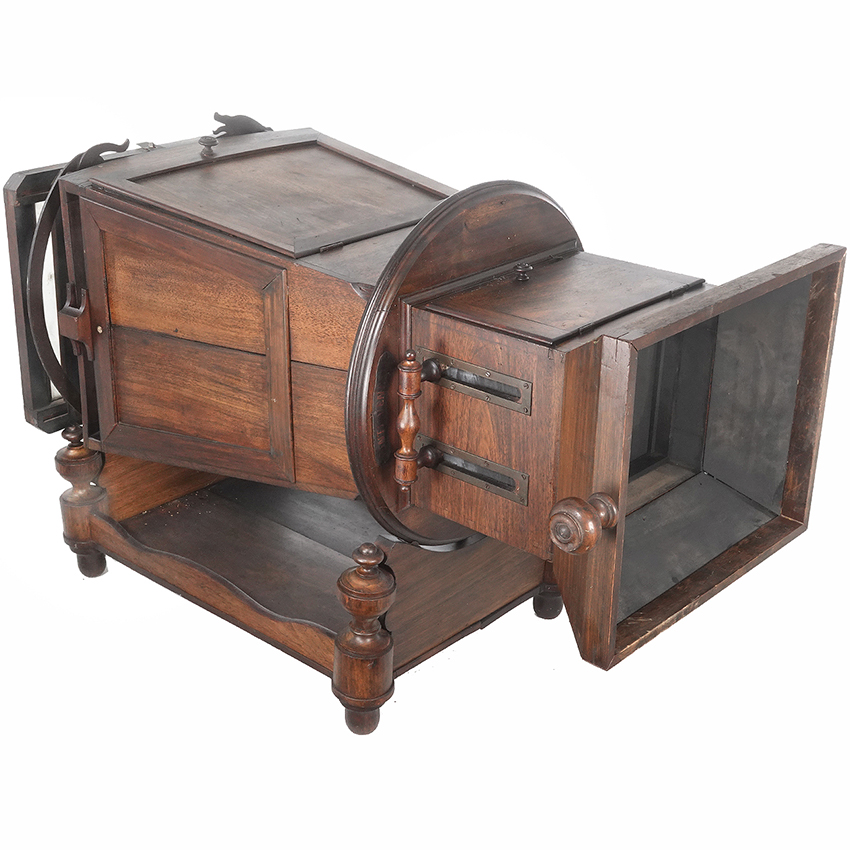
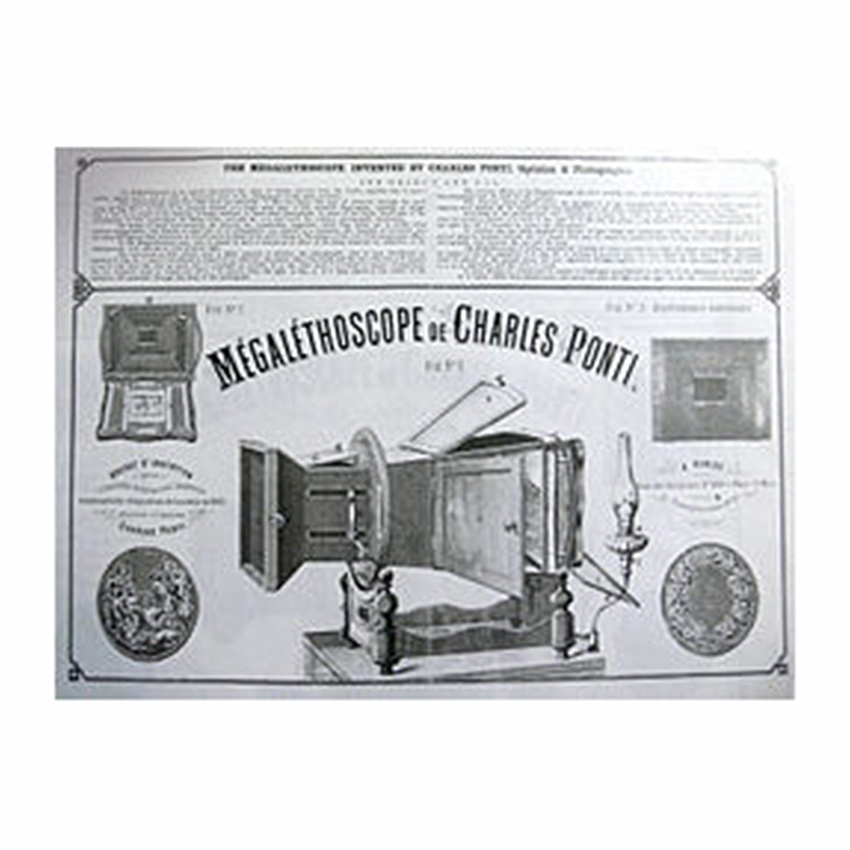
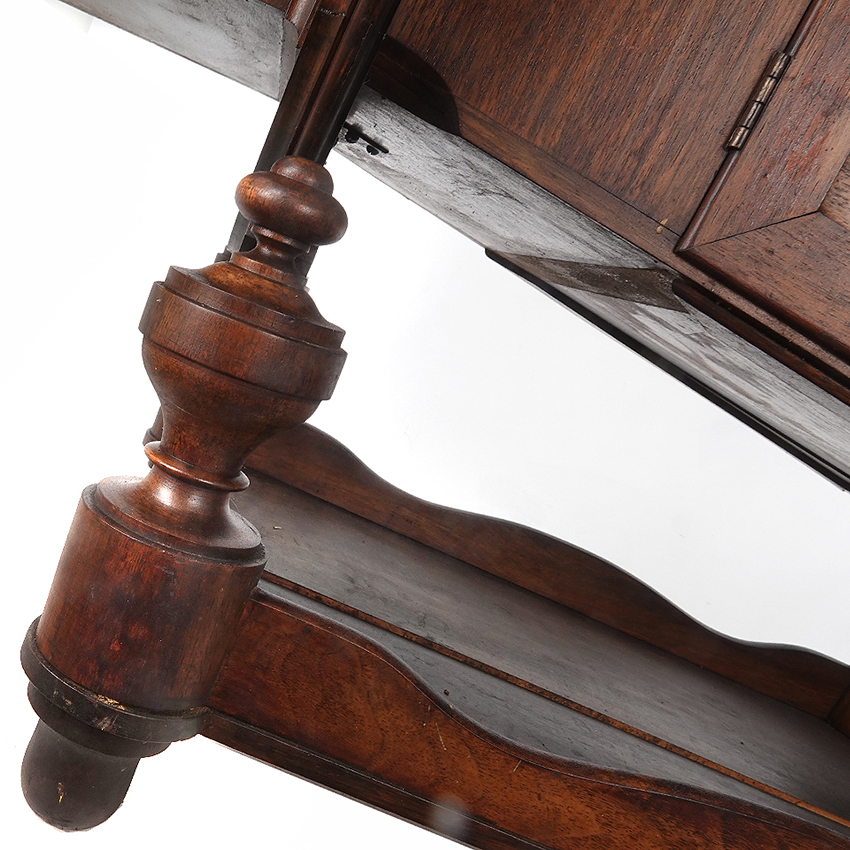
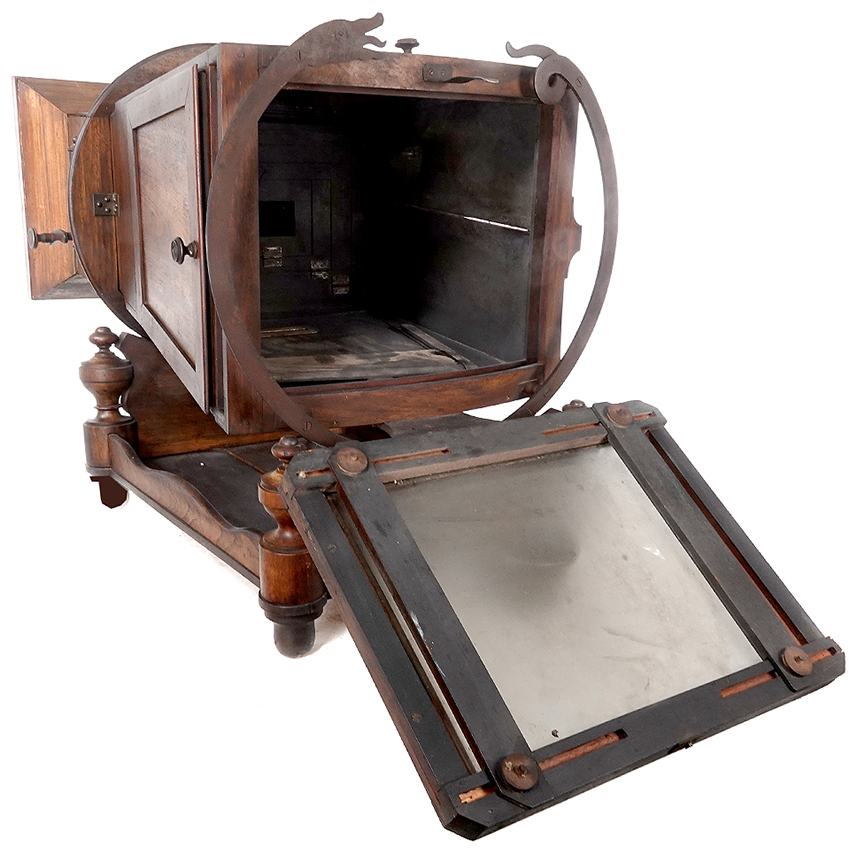
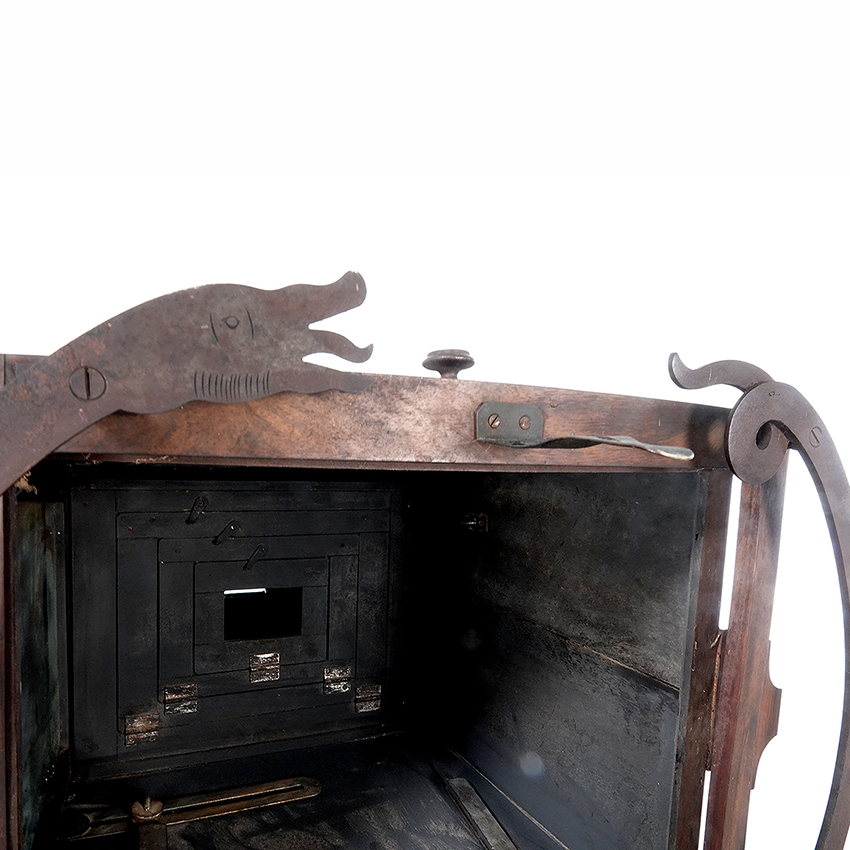
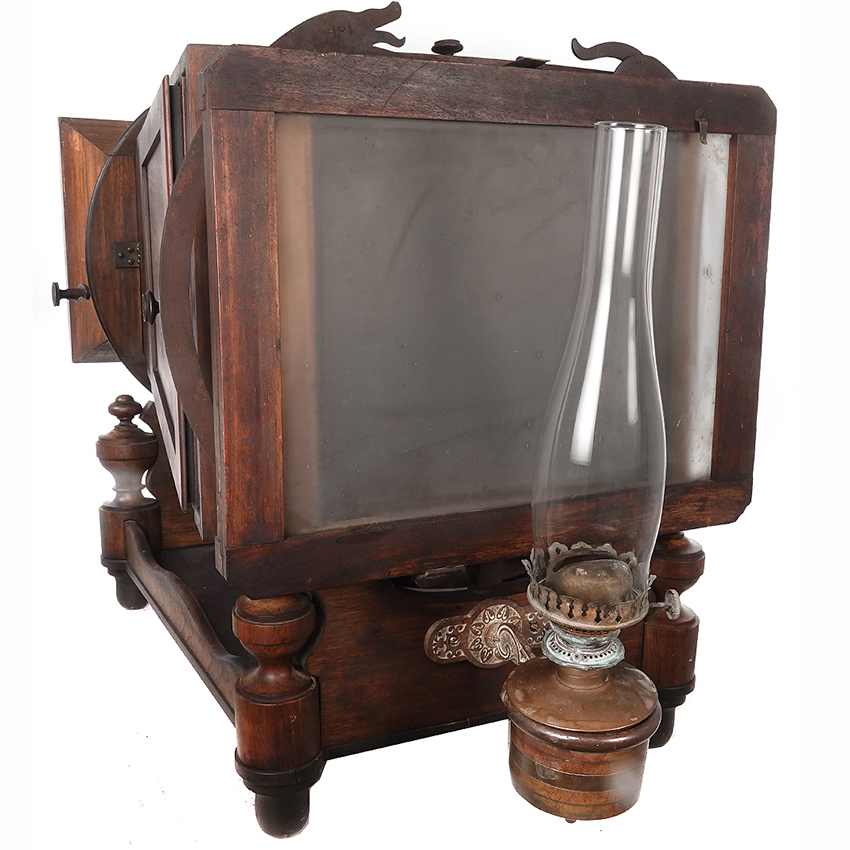
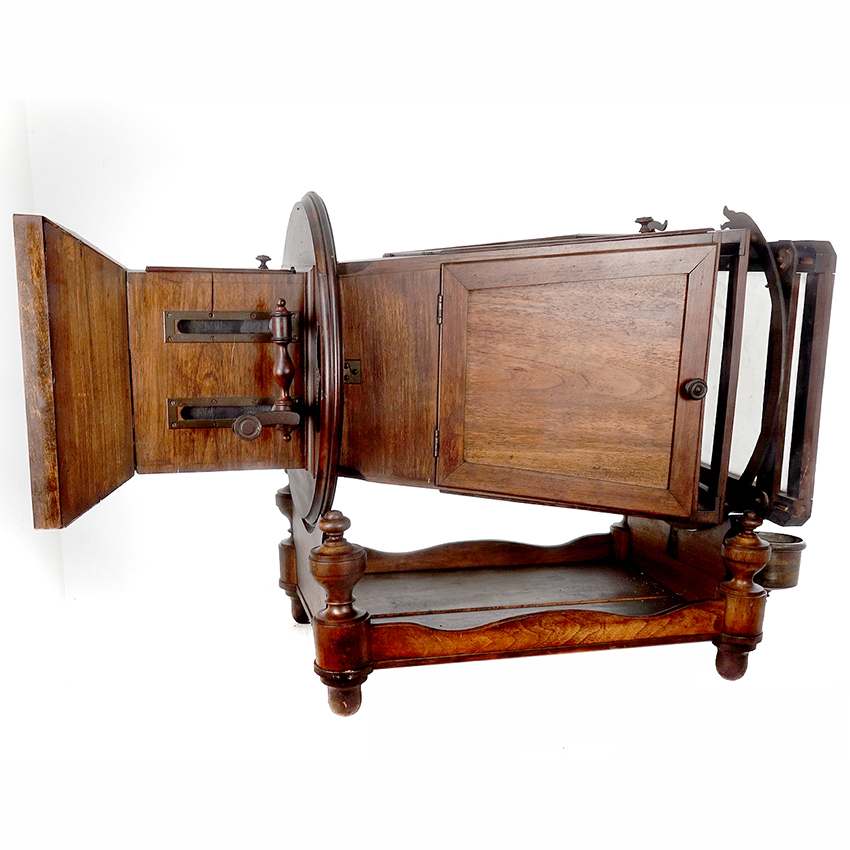
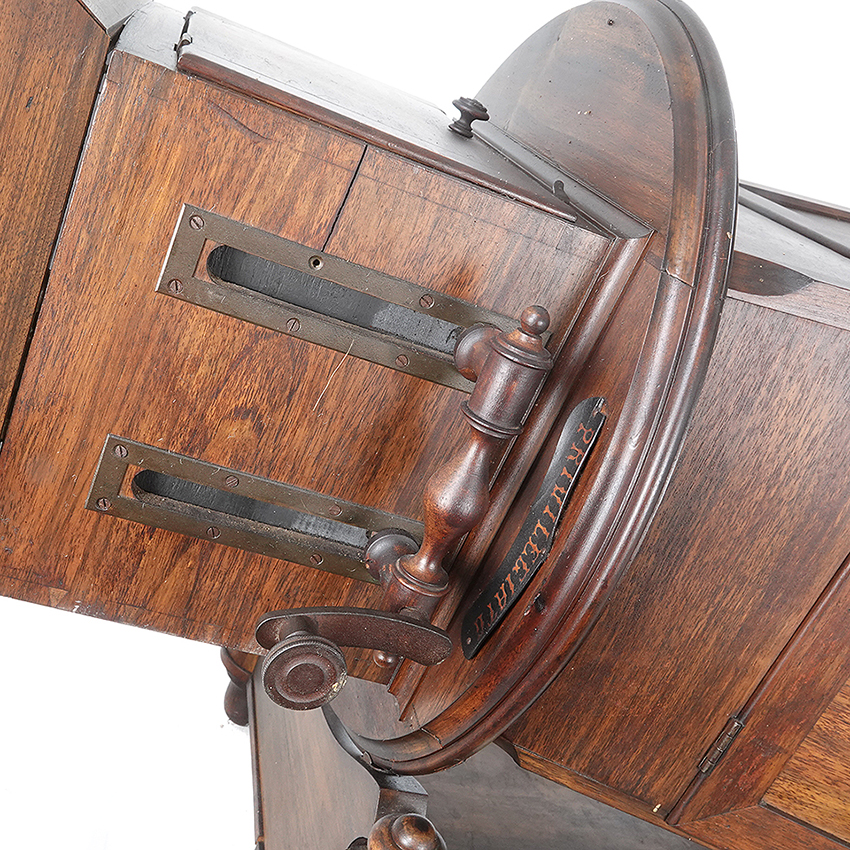
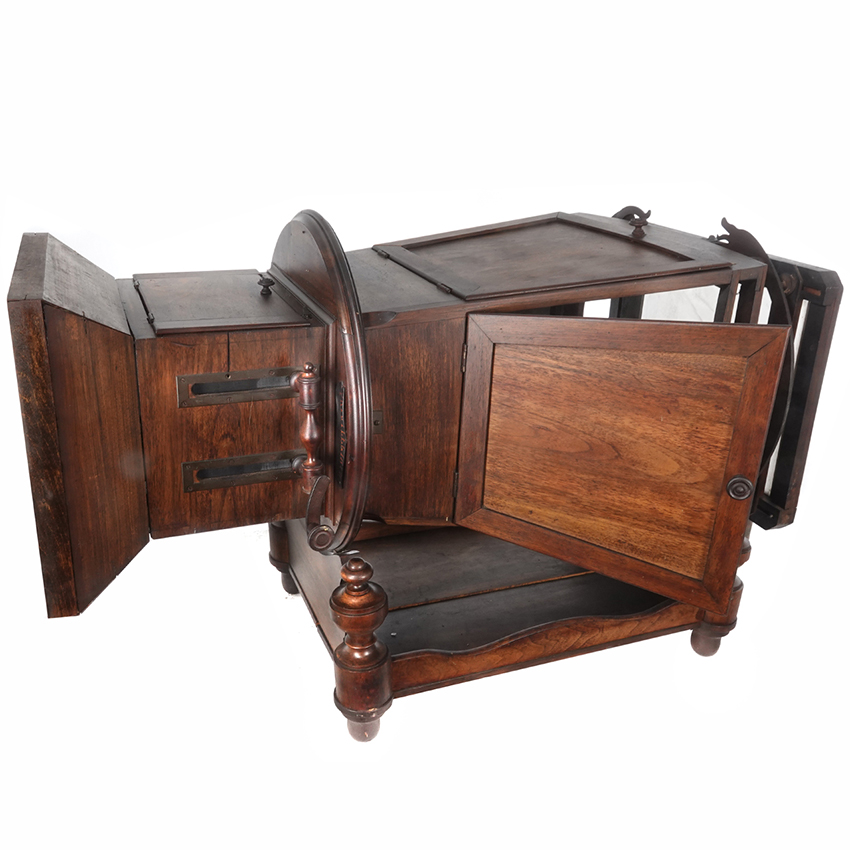
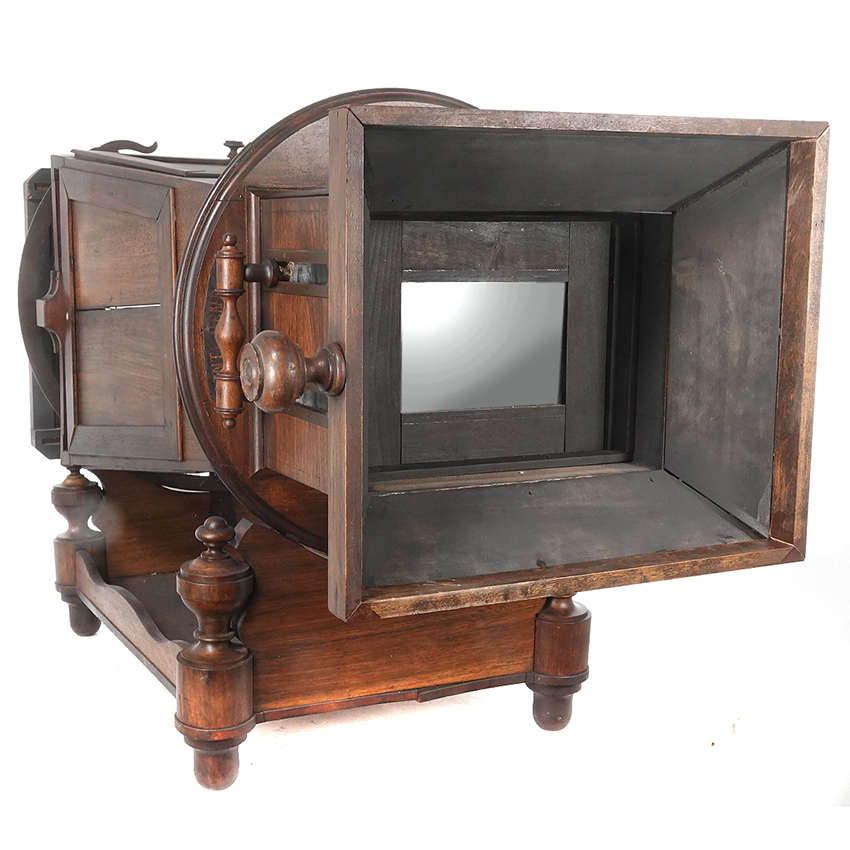
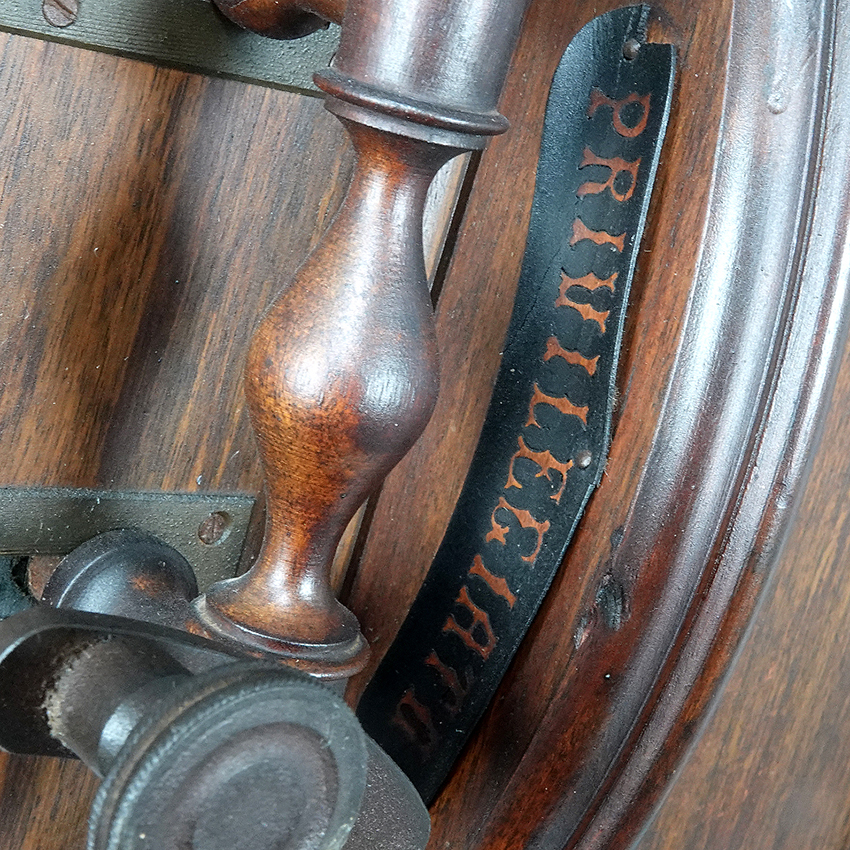
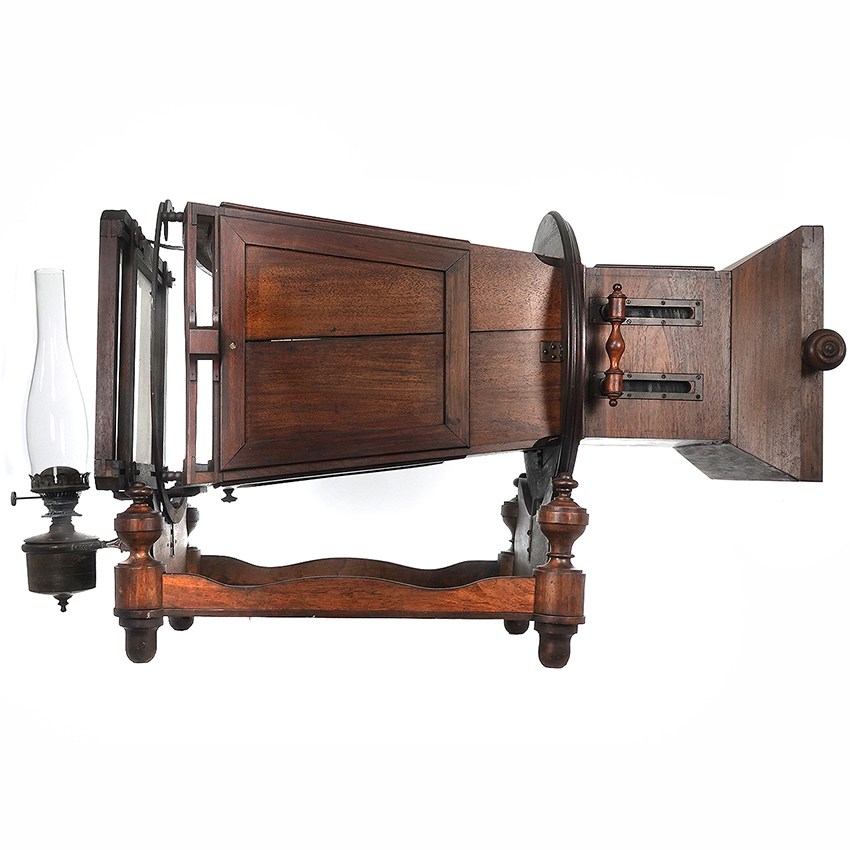
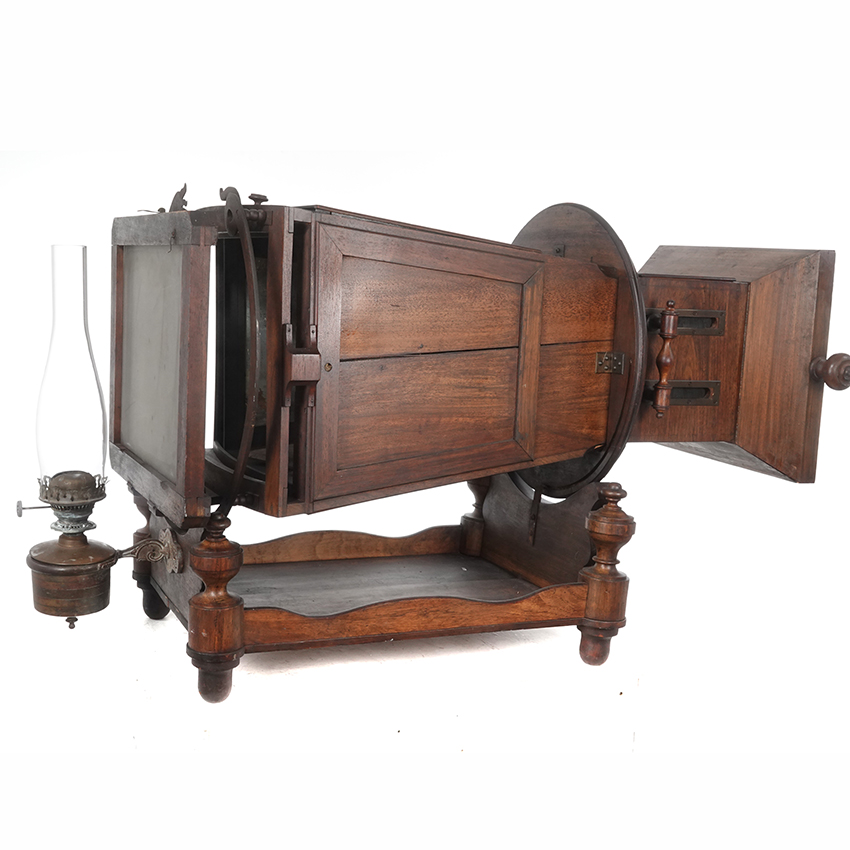
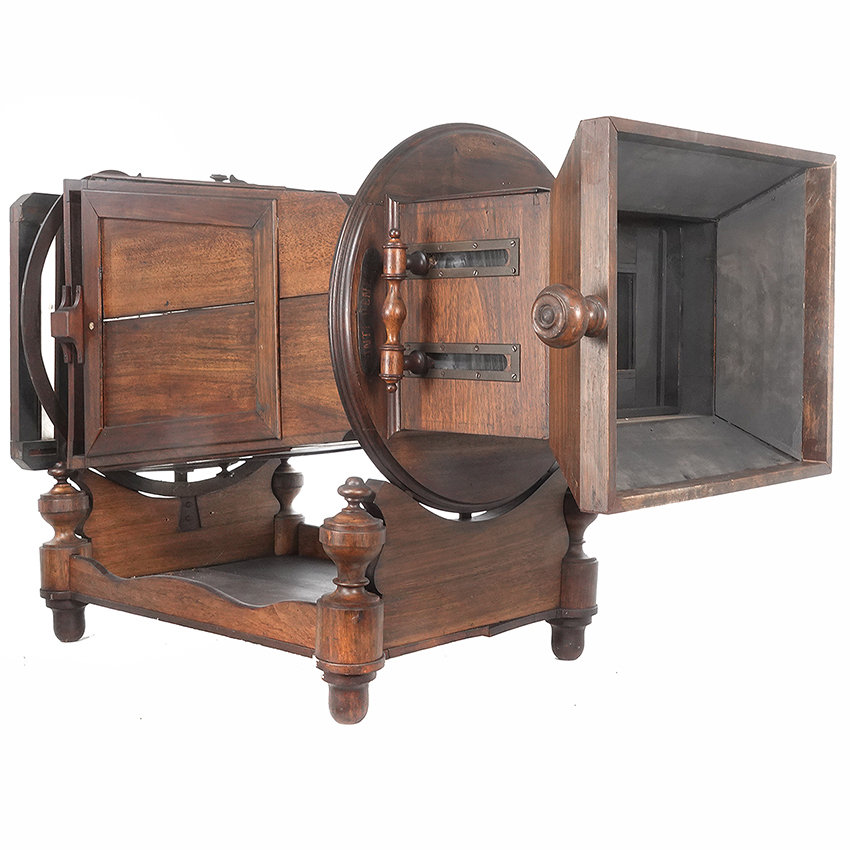
This is a rare 1862 Carlo Ponti Megalethoscope. This is real survivor is amazing condition for its age. I found only one wooden trim piece missing on the underside…. It even has an original oil lamp on the back. We replaced the glass chimney. Over the years I have only seen an example like this once in a museum and in reference books. The decorative blacksmith iron rail that the housing sits on for rotating the camera is in the form of a snake. The main feature of this viewing device for photographs enlarges and adds apparent dimensionality to them. The photographs are applied to concave plates which are inserted into the viewer.
The Megaletoscope was used to view photographs in two different ways with a light-dark effect. The observer viewed heavily enlarged pictures through the optical system. With the “daylight” view, the side shutters opened to allow daylight to illuminate the face of the photograph, a print on very fine albumin paper mounted with other elements on a wooden frame with handgrips. The body of the camera could turn through 90 degrees to enable the viewing of vertical pictures. With the “night-time” view, after re-closing the side shutters and opening the third shutter situated behind the camera in front of a light source, a coloured night-time scene appeared by transparency, with a totally different atmosphere.
Some history…
Carlo Ponti, born in Sagno in the canton of Ticino between 1822 and 1824, set himself up in Venice as an optician and photographer. From 1860, he perfected the “Aletoscopio” (from the Greek “true”, “exact” and “vision”), a viewing apparatus for large-sized photographs.
In 1862, he put the finishing touches to the “Megaletoscopio”, an enlarged version of the Aletoscopio and entrusted its production to the cabinetmaker, Demetrio Puppolin. This example, in varnished walnut, the same size as a Megaletoscope despite its name, bears an oval ceramic plaque with the name C. Naya.
If Carlo Ponti was actually given production exclusivity in 1862, the administrative confusion, which reigned the day after Venetia returned to Italy in October 1866, annulled this privilege and so other Venetian photographers, including Naya, were able to produce and sell this camera, which, by the way, cost the latter a lengthy lawsuit…
36″ x 24.5″ x 18.25″… $3600